Making Sense with Sam Harris: #227 Knowing the Mind

This post is about Sam Harris’ latest podcast episode: #227 Knowing the Mind. You can listen to the first half on Spotify, or you can become a member to gain full access to his podcasts.
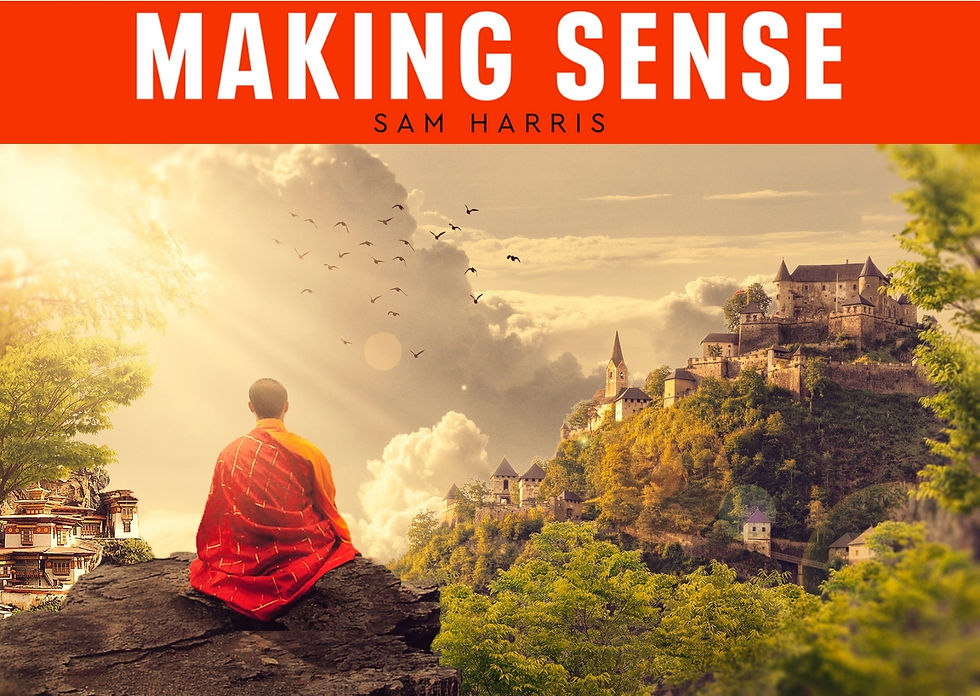
In this episode, Steven Laureys, a Belgian neurologist and neuroscientist, interviews Sam Harris. Together they delve into topics regarding meditation, the mind, and the human living experience.
Harris shares his own journey with meditation and some of the reasons that individuals choose to meditate, while emphasizing the Buddhist tradition’s aim to overcome suffering.
One topic that Harris and Laureys discuss is the human tendency to always want more. People focus on how their life could be better, and believe that happiness can only come with having more. The problem is that any happiness resulting from this will be temporary. “The deeper truth is, you’re only going to be as happy as you can be based on what you’re doing with your attention in each moment.” This extends to relationships: to have the best relationships, you have to already be happy on your own. Love should be given freely, and even if the relationship brings you joy, your well-being should not be based upon it. In fact, relationships get healthier the more you’re ok being without them.
Then they move on to a deeper subject: the inevitability of death. Most people spend their lives avoiding death, but Harris’ experiences make it hard for him to stop thinking about the matter for too long. He acknowledges that death is a reality for us all and can happen at any time. Meditation recognizes how much there is to be grateful for and that your life can only be enjoyed by you. Awareness of death connects you more with reality and helps you realize what you should be expending your time and attention on.
Harris is agnostic as to what happens after death. He’s also aware that we don’t understand how or when consciousness emerges (or if it even does emerge). All he is certain of is that we will be separated from the current life and world. Clearing the mind helps cut through the illusion of duality (the idea that the physical body and mind are separate). An afterlife in heaven where we reunite with our family and friends makes no sense, though there might be something more bizarre waiting for us - we simply can’t know.
Harris and Laureys spend some time reflecting on what consciousness is, though there is no scientific evidence pointing to a conclusive answer. What I found most interesting was the discussion on free will: people think they have it… but they don’t. If you ask someone to make a decision between A and B, no matter how long they take to answer, people don’t have authorship over their final choice. Whether random or purely deterministic, your life is a movie and you’re watching it: the feeling of directing it is just part of that movie, Harris says. And again, meditation helps break this illusion. Laureys believes there is not a good enough understanding of consciousness to say something meaningful about free will, and he doesn’t think that even the smartest AI would have the ability to perceive or feel emotion. Harris, on the other hand, does not question if AI will reach a level of consciousness, but rather, when we will be able to point out their free will. As Laureys says, the future will tell.
The episode provides mainly Harris’ view, though we do get some of Laureys' thoughts. Even if you don’t have much of a philosophical background, this episode is fairly easy to follow along, though I’d recommend you do some brief research on the topics of consciousness and free will prior to listening. The human mind is one of the greatest mysteries, and paradoxically we all have one, which is why I enjoyed the discussion on this episode, and would recommend it to anyone with an interest in the human mind and/or meditation.


Comments